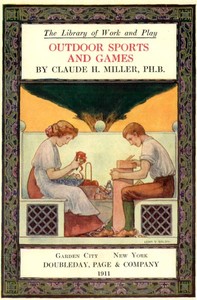
Outdoor Sports and Games by Claude Harris Miller
Let's be clear from the start: Outdoor Sports and Games is not a storybook. Published in 1911, it's a practical manual. Claude Harris Miller, a physical education instructor of his time, put together a comprehensive guide to the games and activities that defined outdoor play in early 20th-century America.
The Story
There's no plot, but there is a clear mission. The book is structured like a coach's playbook. It starts with the philosophy—why vigorous outdoor play is crucial for physical health and moral development. Then, it dives into the how-to. You'll find detailed rules for classic team sports like baseball and football (the old-school kind), but the real gems are the simpler pastimes. Miller explains how to organize a field day, run relay races, and play a dozen variations of tag. He gives instructions for games that have mostly faded from memory, like 'Three Deep' and 'Hare and Hounds,' which was an elaborate form of cross-country tag. It's a full catalog of fun, from lawn tennis to snowball fights, all presented with a serious, instructional tone that's charmingly earnest.
Why You Should Read It
I loved this book for its atmosphere. Reading it feels like stepping into a black-and-white photo. Miller's voice is passionately sincere. He wasn't just writing rules; he was advocating for a lifestyle. His belief in the pure, character-building power of a game played fairly under an open sky is palpable. In our age of organized leagues, digital entertainment, and constant supervision, his world feels incredibly freeing. The book is a direct line to a simpler social time, where community and physical activity were tightly woven together. It made me nostalgic for a era I never knew, and honestly, a bit inspired to try some of these games out at my next family picnic.
Final Verdict
This one's a niche read, but a wonderful one. It's perfect for history lovers, educators, or parents feeling overwhelmed by modern kid culture. It's also great for anyone who enjoys 'slow media'—old books that offer a quiet, thoughtful window into the past. You won't get a thrilling narrative, but you will get a profound sense of connection to how people lived, played, and thought about leisure over a hundred years ago. Think of it less as a manual you'll follow to the letter, and more as a conversation with a very enthusiastic, old-fashioned coach about the timeless value of play.
This text is dedicated to the public domain. Use this text in your own projects freely.