
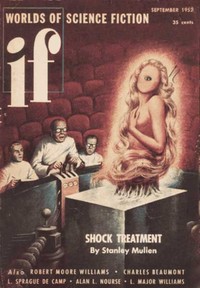
Sinister Paradise by Robert Moore Williams
Let's talk about a book that proves good sci-fi ideas are timeless. Sinister Paradise is a blast from the past, but its core mystery still grabs you.
The Story
The plot kicks off with a bang. A spaceship crew, led by John Ross, makes a forced landing on a beautiful, Earth-like planet. At first, it seems like a lucky break—no immediate danger, plenty of resources. But they soon find the wreck of another human ship. The survivors from that crash are still there, living in a simple village. They seem healthy and peaceful, but something is very off. They're all a little too similar, a little too calm, and they have no desire to leave or even question their reality.
John and his crew discover the terrifying truth: the planet itself is alive in a way, controlled by a vast, ancient intelligence they call the Guardian. This entity is slowly absorbing the humans, rewriting their biology and minds to fit into its perfect, static system. The jungle isn't just plants; it's part of the Guardian's network. The "paradise" is a gilded cage designed to remove all conflict, individuality, and free will. The real fight isn't with lasers, but against the seductive pull of becoming a contented, thoughtless part of the hive.
Why You Should Read It
What I love about this book is its mood. Williams builds a fantastic sense of unease. The horror isn't in jump scares, but in the slow, inevitable process of assimilation. The friendly villagers are more frightening than any monster because they represent a lost future. John Ross is a great old-school hero—practical, stubborn, and fiercely protective of his own humanity. His struggle isn't just to escape, but to want to escape, when everything around him is offering a painless, easy life.
It's a sharp critique of conformity wrapped in a space adventure. Written in the 1950s, you can feel the era's anxieties about losing oneself to groupthink, but it translates perfectly to today's worries about technology and identity.
Final Verdict
This book is a perfect pick for fans of classic, idea-driven sci-fi like the early works of Philip K. Dick or John Wyndham. It's also great for anyone who enjoys stories where the setting itself is the villain. The prose is straightforward and the story moves quickly, so it's a satisfying one- or two-sitting read. Don't go in expecting hard science; go in for a smart, spooky parable about what it means to be human, and what we might be willing to give up for a quiet life. It's a hidden gem from the golden age of pulp that deserves a fresh look.
No rights are reserved for this publication. Thank you for supporting open literature.
Karen Johnson
2 years agoI wanted to compare this perspective with traditional views, the emphasis on ethics and sustainability within the topic is commendable. It cleared up a lot of the confusion I had previously.
Michael Martinez
5 months agoRight from the opening paragraph, the way it handles controversial points with balance is quite professional. Top-tier content that deserves more recognition.
Sarah Lee
1 year agoI started reading this with a critical mind, the way the author breaks down the core concepts is remarkably clear. I'll be recommending this to my students and colleagues alike.
George Taylor
1 year agoWhile browsing through various academic sources, the clarity of the writing makes even the most dense sections readable. I'll be recommending this to my students and colleagues alike.



William Rodriguez
6 months agoThe citations provided are a goldmine for further academic study.