1

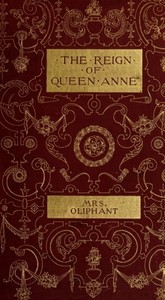
Historical Characters in the Reign of Queen Anne — Key Ideas to Explore
(0 User reviews)
46
Project Gutenberg
2016
Not confirmed
Defoe, Daniel, 1661?-1731; Anne, Queen of Great Britain, 1665-1714; Swift, Jonathan, 1667-1745; Addison, Joseph, 1672-1719
Readers of public-domain and historical texts
Project Gutenberg digital edition
en
Edition facts
Words
77,929
Reading time
339 min
Text sections
10
The source record for Historical Characters in the Reign of Queen Anne — Key Ideas to Explore measures this digital text at 77,929 words, 5 hr 39 min estimated reading time, and 10 detected text sections.
The text analysis averages about 31.3 words per sentence, while the detected sections provide another way to judge how the source is divided.
Project Gutenberg metadata also associates the work with “Defoe, Daniel, 1661?-1731,” connecting these edition facts with the source record’s subject description.
Source:
Project Gutenberg record #53644
Mrs. Oliphant's biographical sketches of Swift, Defoe, Addison, and Queen Anne, focusing on their personalities and social contexts. The narrative voice blends anecdotal detail with brisk pacing, as seen in the coffee-house scene where Swift's abrupt question about weather reveals his whimsical humor.
Editorial Edition Score
4.8/5
★★★★★
★★★★★
Calculated from edition completeness, EPUB availability, text structure and catalogue metadata. Not a user rating.
How this score is calculated
- Description quality20 pts
- Title & short description10 pts
- Source metadata20 pts
- Text length15 pts
- Chapters / structure15 pts
- EPUB file integrity20 pts
Total of 100 points, scaled to a 2.5-5.0 range. Editions with an empty description or a missing EPUB file are not scored.
Edition quality
Public-domain source text
Read the source text
The source text is kept in the dedicated reader, separate from this catalogue record and its commentary.
Mrs. Oliphant opens her portrait of Jonathan Swift with a striking anecdote: the clergyman paces a coffee-house in silence for half an hour, then abruptly asks a stranger about the weather. The scene, drawn from contemporary accounts, captures the author's method of building character through reported behavior rather than abstract analysis. Throughout the volume, Oliphant shifts between brisk narrative and reflective commentary, often letting a single gesture or remark stand for a larger trait.
Anecdote as Evidence
Oliphant relies heavily on anecdotal episodes to convey personality. The Swift coffee-house story is the most extended example: the clergyman walks back and forth, pays his money, and leaves without speaking—until he poses his odd question about weather. The author presents this as evidence of Swift's "whimsical humor" and love of making spectators stare. She does not claim the story is universally true, but uses it to illustrate a pattern. Elsewhere, she notes that Swift "tossed into the world without a name a book which made a greater impression than any contemporary publication," linking his anonymity to a proud independence. These small, concrete details—the hat, the pacing, the abrupt query—form the backbone of her character study.
Pacing and Narrative Rhythm
The prose moves at an uneven pace, mirroring the author's interest in sudden shifts. In the Swift section, a long, measured description of his coffee-house routine is followed by the rapid-fire dialogue: "Pray, sir, do you remember any good weather in the world?" The rhythm then slows again as Oliphant reflects on his "imperious temper and arrogant ways." This alternation between scene and summary gives the biography a novelistic texture. When discussing Addison, she notes his friendship with Swift and quotes Addison's praise of Swift as "the most Agreeable Companion, the Truest Friend, and the Greatest Genius of his age," but does not linger; the pace pushes forward to the next episode.
Voice and Authorial Stance
Oliphant's own voice is present but restrained. She occasionally offers judgments—Swift's "native arrogance," his "scorn of the world's opinion"—but these are grounded in the evidence she has presented. She does not moralize at length; instead, she lets the anecdotes speak. The tone is conversational, as when she writes that Swift "must have been on fire under those expressive brows" when he came to London in 1710. Such phrases add color without overwhelming the factual record. Her choice to begin the Swift chapter with a long, unattributed story sets a pattern: the reader is drawn into a specific moment before being given broader context.
Readers should attend to how Oliphant selects and arranges her material. The coffee-house anecdote is not merely decorative; it functions as a compressed portrait of Swift's social performance. Noticing where she slows down for a scene and where she speeds through summary will reveal her method of building character from fragments. The volume rewards those who read for narrative craft as much as for historical fact.
That rainy afternoon, I sat with Mrs. Oliphant’s brisk sketches of Swift and Defoe, their quarrels and coffee-house wit. Her offhand mention of their world’s ancient anxieties stayed with me. Later, almost without thinking, I reached for A Thousand Years of Jewish History From the days of Alexander the Great to the Moslem Conquest of Spain — Story, Setting & Ideas, and found the same human stubbornness, centuries earlier, wearing different coats.
There are no reviews for this eBook.
There are no comments for this eBook.
Reader reflection
How will you remember this book?
Save your reaction, strongest insight, and memorable passage.
Your progress
0
/
10
2
Did this book hold your interest?
3
Is this a title you would suggest to others?
4
Did the language feel accessible?
5
How did the pace of the book feel?
6
What was its emotional impact?
7
How original did the book feel?
8
How strong was your personal connection to the text?
9
What did this book teach you most?
10