
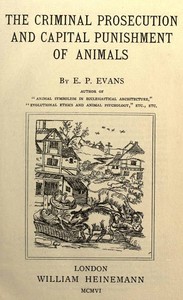
The Criminal Prosecution and Capital Punishment of Animals by E. P. Evans
Forget everything you think you know about courtroom dramas. The Criminal Prosecution and Capital Punishment of Animals by E. P. Evans isn't fiction. It's a meticulously researched collection of real historical cases where animals were put on trial.
The Story
There isn't a single plot, but a parade of unbelievable legal proceedings. Evans, writing in the early 1900s, acts as a detective, uncovering cases from the Middle Ages up to the 18th century. We meet a sow and her piglets executed for killing a child. We see entire townships taking weevils to ecclesiastical court for ruining vineyards, complete with court-appointed defense lawyers for the insects. There are trials for homicidal bulls, blasphemous roosters, and thieving dolphins. The "story" is in the absurd yet solemn process: animals were arrested, held in jail, given a formal defense (often arguing they were acting on instinct, or that they were agents of the Devil), and sentenced. Executions were public spectacles, sometimes with the animal dressed in human clothes.
Why You Should Read It
This book hooked me because it's so much more than a list of weird facts. It forces you to think. Why did they do this? Evans suggests it reveals a worldview where nature and the divine were deeply intertwined with human law. Prosecuting an animal was a way to restore a moral order upset by the creature's act. It's darkly funny to read about a lawyer arguing a rat's case, but it's also a profound look at how people try to make sense of chaos. The real characters are the communities themselves—their fears, their logic, and their desperate need for ceremony and justice, even if that justice was directed at a beetle.
Final Verdict
Perfect for history buffs who love oddities, true crime fans looking for the ultimate cold case, or anyone who enjoys a conversation-starting book. It's not a dry legal text; Evans has a sharp, sometimes sarcastic wit. Be warned, some details are grim (medieval justice was brutal). But if you've ever wanted a book that will make you stop and say, "Wait, they did WHAT?" to every single person you see for a week, this is it. It's a short, unforgettable trip down the rabbit hole of human strangeness.
Legal analysis indicates this work is in the public domain. Access is open to everyone around the world.
Elizabeth Harris
1 year agoRight from the opening paragraph, the case studies and practical examples provided add immense value. I am looking forward to the author's next publication.
William White
7 months agoI found the author's tone to be very professional yet accessible, the level of detail in the second half of the book is truly impressive. This exceeded my expectations in almost every way.
Mary Martin
6 months agoThe clarity of the introduction set high expectations, and the practical checklists included are a great touch for real-world use. It’s hard to find this much value in a single source these days.
Emily Lee
6 months agoI particularly value the technical accuracy maintained throughout.



Mary Thompson
10 months agoI found the author's tone to be very professional yet accessible, the step-by-step breakdown of the methodology is extremely helpful for students. I'll be citing this in my upcoming project.