
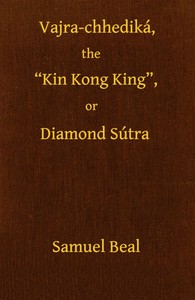
Vajra-chhediká, the "Kin Kong King," or Diamond Sútra by Unknown
Let's be clear from the start: this isn't a novel. There's no hero's journey, no villain, no plot twist in the usual sense. The Diamond Sutra is a recorded teaching, a dialogue. The Buddha is hanging out with a massive group of monks and his student Subhuti asks him a question about how a bodhisattva (someone dedicated to helping others) should live and think. What follows is a series of questions and answers that systematically challenge our most basic assumptions.
The Story
The 'story' is the progression of this conversation. Subhuti asks something like, 'How should we help all beings?' and the Buddha replies, essentially, 'By helping all beings... while understanding that there are, in truth, no separate beings to help.' He uses this pattern over and over. He'll name something we think is solid and real—a teaching, a virtue, even the Buddha himself—and then say, 'It is called a teaching, but in truth, there is no teaching to be found.' It’s not saying these things don't exist. It's pointing out that our rigid, fixed ideas about them are the problem. The core drama is intellectual and spiritual: watching your own mind grapple with these paradoxes.
Why You Should Read It
I recommend this because it's a tool for mental spring cleaning. Reading it feels like the literary equivalent of someone asking, 'Why do you believe that?' about everything you take for granted. It attacks the idea of a solid, separate 'self' with relentless kindness. The famous line about seeing the teachings 'like a raft to be abandoned after use' has stuck with me for years. It’s a warning against clinging to any belief system, even this one. It’s not about building a new philosophy; it’s about loosening your grip on all of them. The repetitive structure, which might seem odd at first, actually lulls you into a different way of listening. Each repetition is like a tap on the same mental block until it finally cracks.
Final Verdict
Perfect for the curious thinker, the spiritual seeker tired of dogma, or anyone who enjoys philosophy that feels like a puzzle for the soul. It's also great for people who think they don't have time to read—it's seriously short. You won't get characters to love or a plot to get lost in. Instead, you get a direct, challenging, and strangely liberating conversation. Keep an open mind, maybe read it twice, and see what shakes loose.
This title is part of the public domain archive. Preserving history for future generations.
Sarah White
10 months agoI took detailed notes while reading through the chapters and the insights into future trends are particularly thought-provoking. Thanks for making such a high-quality version available.
Margaret Rodriguez
3 months agoExtremely helpful for my current research project.
Nancy Lopez
4 months agoThis was exactly the kind of deep dive I was searching for, the footnotes provide extra depth for those who want to dig deeper. Well worth the time invested in reading it.
Kimberly Gonzalez
2 months agoThe balance between academic rigor and readability is perfect.





Linda Anderson
9 months agoThis is an essential addition to any academic digital library.