1

The Leading Facts of English History — Themes and Context
(0 User reviews)
292
Project Gutenberg
2005
Not confirmed
Great Britain -- History
Readers of public-domain and historical texts
Project Gutenberg digital edition
en
Edition facts
Words
181,995
Reading time
792 min
Text sections
17
Before opening The Leading Facts of English History — Themes and Context, the edition data offers a quick orientation: 181,995 words, 13 hr 12 min estimated reading time, and 17 detected text sections.
The text analysis averages about 20.0 words per sentence, while the detected sections provide another way to judge how the source is divided.
Project Gutenberg metadata also associates the work with “Great Britain -- History,” connecting these edition facts with the source record’s subject description.
Source:
Project Gutenberg record #17386
Montgomery's narrative voice shifts from detached summary to vivid, opinionated scenes, as in Cromwell's expulsion of Parliament. The prose accelerates during battles like Dunbar and Worcester, while constitutional documents are presented in a slower, analytical register.
Editorial Edition Score
4.8/5
★★★★★
★★★★★
Calculated from edition completeness, EPUB availability, text structure and catalogue metadata. Not a user rating.
How this score is calculated
- Description quality20 pts
- Title & short description10 pts
- Source metadata20 pts
- Text length15 pts
- Chapters / structure15 pts
- EPUB file integrity20 pts
Total of 100 points, scaled to a 2.5-5.0 range. Editions with an empty description or a missing EPUB file are not scored.
Edition quality
Public-domain source text
Read the source text
The source text is kept in the dedicated reader, separate from this catalogue record and its commentary.
D. H. Montgomery's The Leading Facts of English History modulates its narrative voice with notable shifts in pace and detail. In the excerpt covering the Civil War and Cromwell, the prose moves from brisk, factual summaries of battles—such as the defeat at Dunbar described as 'utterly defeated'—to a more dramatic, almost theatrical account of Cromwell's expulsion of the Rump Parliament. The author inserts direct speech ('You are no Parliament!') and vivid details (the Speaker dragged from his chair, the key pocketed, the placard 'The House to let, unfurnished!'), creating a scene that feels immediate and opinionated.
This variation in tempo and tone is a deliberate rhetorical strategy, not merely a reflection of available sources. Montgomery alternates between compressed narrative and expanded, almost novelistic episodes, suggesting a pedagogical aim: to hold attention through dramatic highlights while covering broad sweeps of constitutional history.
Voice and Opinion in the Cromwellian Episode
Montgomery does not feign neutrality. In the account of Cromwell's intervention in Parliament, the author adopts a partisan, almost satirical tone. He reports that Cromwell shouted 'drunkard,' 'glutton,' 'extortioner' at the departing members—a detail that emphasizes the Protector's contempt. The subsequent placard is described as the work of a 'Royalist wag,' a phrase that injects a note of humor and aligns the reader with a particular interpretation. This is not dry chronicle; it is a crafted narrative that judges as it tells.
The voice becomes especially sharp when Montgomery characterizes the 'Little Parliament' as 'practically of his own choosing' and notes its members were 'chosen from a list furnished by the ministers of the various Independent churches.' He adds that it 'was in no true sense a representative body,' a judgment that reinforces a constitutionalist perspective. Such editorializing is consistent throughout the excerpt, making the author's stance clear without resorting to overt moralizing.
Pace and Compression in Military Narrative
The handling of military events reveals a deliberate compression. The battle of Dunbar is dispatched in a single sentence: 'it was utterly defeated at Dunbar (1650).' No details of tactics, casualties, or commanders are given. The battle of Worcester receives slightly more space but is still summarized in two sentences, with the notable addition of Charles's escape 'in an oak at Boscobel.' This detail—almost folkloric—is the only vivid element in an otherwise rapid account.
By contrast, the political maneuvering around the 'Instrument of Government' is presented in a slower, more explanatory mode. Montgomery lists the constitution's provisions in a footnote, breaking the narrative flow. This alternation between swift battle summaries and deliberate constitutional exposition creates a rhythm that prioritizes political over military history, consistent with the book's subtitle and the author's stated aim to illustrate 'the law of national growth.'
Structural Signals and the Use of Footnotes
Montgomery employs a clear structural apparatus to manage pace. Section numbers (454, 455) and bold headings ('Cromwell expels Parliament,' 'Cromwell becomes Protector') segment the text into digestible units. These markers allow the reader to navigate the dense material, but they also serve to punctuate the narrative, creating pauses that slow the reading experience.
Footnotes are used strategically. One footnote directs readers to Aytoun's 'Lays of the Scottish Cavaliers' for a poetic treatment of Montrose's execution, while another explains the composition of the 'Little Parliament.' These notes do not merely cite sources; they offer interpretive asides that enrich the main text without breaking its flow. The footnote on the 'Instrument of Government' provides a detailed list of provisions, effectively creating a secondary layer of information for readers who wish to slow down and examine constitutional details. This dual-layered approach—fast narrative above, slower reference below—is a distinctive feature of Montgomery's method.
Readers will benefit from attending to Montgomery's shifts in register: when the prose accelerates, he is often compressing military or political events; when it slows, he is likely explicating a constitutional document or inserting a vivid scene. The footnotes and section headings are not mere ornaments but integral to the book's pacing. Noticing these changes in tempo and voice will reveal the author's priorities—and his subtle judgments—more clearly than any summary of events.
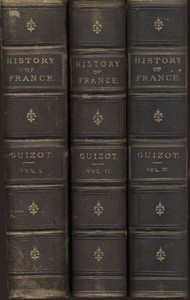
I found myself thinking of that brisk, opinionated pace in Montgomery’s retelling of Cromwell, and it reminded me of winter afternoons spent in the older French histories, where battles feel close enough to hear. There is a particular warmth in how the old chroniclers linger on detail, much like A Popular History of France from the Earliest Times, Volume 1 — Reading Companion, which sits beside it on my shelf, quietly companionable.
There are no reviews for this eBook.
There are no comments for this eBook.
Reader reflection
How did this book work for you?
Your answers remain private and are stored only in this browser.
Your progress
0
/
10
2
Was reading this book enjoyable?
3
Is this a title you would suggest to others?
4
How easy was the book to follow?
5
How much did the book move you?
6
Did you relate to its people, ideas, or situations?
7
Would you read this book again?
8
How useful did the reading feel?
9
In one sentence, what did you learn?
10