1

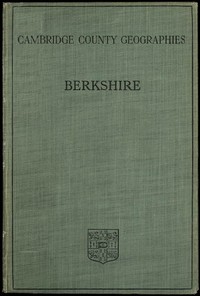
Berkshire — Themes and Context
(0 User reviews)
260
Project Gutenberg
2015
Not confirmed
Berkshire (England)
Readers of public-domain and historical texts
Project Gutenberg digital edition
en
Edition facts
Words
35,050
Reading time
153 min
Text sections
29
Before opening Berkshire — Themes and Context, the edition data offers a quick orientation: 35,050 words, 2 hr 33 min estimated reading time, and 29 detected text sections.
The text analysis averages about 20.7 words per sentence, while the detected sections provide another way to judge how the source is divided.
Project Gutenberg metadata also associates the work with “Berkshire (England),” connecting these edition facts with the source record’s subject description.
Source:
Project Gutenberg record #48561
This editorial note examines Horace Woollaston Monckton's 1911 county geography, focusing on its layered narrative voice—shifting from geological detachment to archaeological precision—and the deliberate pacing of its historical survey, from deep time to human settlement.
Editorial Edition Score
4.8/5
★★★★★
★★★★★
Calculated from edition completeness, EPUB availability, text structure and catalogue metadata. Not a user rating.
How this score is calculated
- Description quality20 pts
- Title & short description10 pts
- Source metadata20 pts
- Text length15 pts
- Chapters / structure15 pts
- EPUB file integrity20 pts
Total of 100 points, scaled to a 2.5-5.0 range. Editions with an empty description or a missing EPUB file are not scored.
Edition quality
Public-domain source text
Read the source text
The source text is kept in the dedicated reader, separate from this catalogue record and its commentary.
Horace Woollaston Monckton's Berkshire (1911) opens not with a pastoral scene but with a physical map and a table of contents that reads like a geological survey: 'Surface and General Features,' 'Geology and Soil,' 'Climate and Rainfall.' The narrative voice is that of a patient field naturalist, one who measures time in feet of gravel deposited and valleys deepened. Yet within this measured exposition, Monckton shifts registers when describing human artifacts—a polished flint chisel from Englefield, a dagger from Lambourn Down—suddenly precise, almost reverent. This tension between the impersonal forces of geology and the intimate traces of human craft gives the work its distinctive rhythm.
Geological Time and Narrative Pace
Monckton's prose moves at the speed of erosion. In the chapter on antiquities, he describes Palaeolithic implements found in gravels 'from 85 to 114 feet above the present level of the river,' then calmly infers that 'the valley has been deepened as much as from 85 to 114 feet since the time when the men who made the implements lived.' The sentence structure itself enacts this slow accumulation: a cascade of clauses that mimics the layering of sediment. When he turns to Neolithic remains, the pace quickens. 'Wayland Smith’s Cave, a mile to the east of Ashbury,' he writes, 'is composed of some 32 stones, the remains of a long barrow.' The number—32—is a sudden, countable fact in a landscape of immeasurable time. This alternation between the vast and the specific is the book's governing rhythm.
The Voice of the Museum Catalogue
Monckton frequently adopts the tone of a museum label. 'In the Reading Museum there is a fine polished flint chisel from Englefield, and also polished axes from Broadmoor, from Pangbourne, and from the beds of the Thames and Kennet.' The list is unadorned, but the accumulation of place names—Englefield, Broadmoor, Pangbourne—anchors each object in a specific Berkshire locality. This is not a romantic antiquarianism; it is a systematic inventory. Yet the voice softens when describing 'pretty little arrow-heads' found 'at many places on the downs.' The adjective 'pretty' is a rare personal note, a flicker of aesthetic pleasure amid the gravel pits and barrows. Such moments suggest that Monckton's detachment is a deliberate rhetorical choice, not a lack of feeling.
Shifts in Scale: From River Gravel to Bronze Hoards
The book's most striking structural feature is its sudden shifts in scale. A paragraph on the 'extensive deposits of peat' may be followed by a sentence on 'a cemetery of this period found at Sulham,' with 'many earthenware urns' now in the Reading Museum. Monckton moves from the landscape to the artifact without transition, as if the two were continuous. This is especially clear in his treatment of the Bronze Age: 'A considerable number of bronze implements were found in one place at Yattendon, and another hoard of them was discovered at Wallingford.' The word 'hoard' carries a hint of treasure, but Monckton does not embellish. He lets the objects speak for themselves, trusting that their mere presence—in a gravel pit, a riverbed, a museum case—will convey the weight of time.
The Interruption of the Modern
Occasionally, the modern world intrudes. In the chapter on industries, Monckton describes 'Factory Girls leaving Work at Reading'—a photograph caption that jolts the reader from prehistoric flints to the industrial present. The narrative voice does not change register; it simply records. This flatness is itself a comment: the same observational neutrality that describes a Palaeolithic implement now describes a factory gate. The effect is to suggest that the human story is a single, unbroken sequence, from 'leaf-shaped roughly-flaked flint weapons' to the machinery of Reading's mills. Monckton never makes this argument explicitly; he lets the juxtaposition do the work.
Monckton's Berkshire rewards a reader willing to move at its own deliberate pace. Pay attention to the moments when the prose slows to describe a single object—a dagger, an urn, a chisel—and when it accelerates across millennia. The book's authority lies not in grand conclusions but in the patient accumulation of detail. For those interested in how early twentieth-century geographers balanced scientific detachment with local affection, this volume offers a quiet, instructive model.
I found myself lingering on Monckton's slow shift from stone to settlement, and it reminded me of standing in a quiet gallery, tracing how pottery and amulets moved from dust to display. That same unhurried patience lives in A guide to the Egyptian collections in the British Museum — Background and Themes, where objects seem to wait for a reader's soft attention. Both books ask for time, not speed, and I still feel that hush in my chest.
There are no reviews for this eBook.
There are no comments for this eBook.
Reader reflection
How did this book work for you?
Your answers remain private and are stored only in this browser.
Your progress
0
/
10
2
Was reading this book enjoyable?
3
Would you recommend this book to another reader?
4
How easy was the book to follow?
5
Did it raise ideas you would like to talk about?
6
Would you read this book again?
7
What did you think about the pace?
8
Could you follow the author’s main argument?
9
What changed or sharpened your thinking?
10



![Cover of Historical and descriptive sketches of the town and soke of Horncastle [1822] in the county of Lincoln and several places adjacent — Reading Companion](https://ambki.com/storage/media/covers/pg62327.jpg)